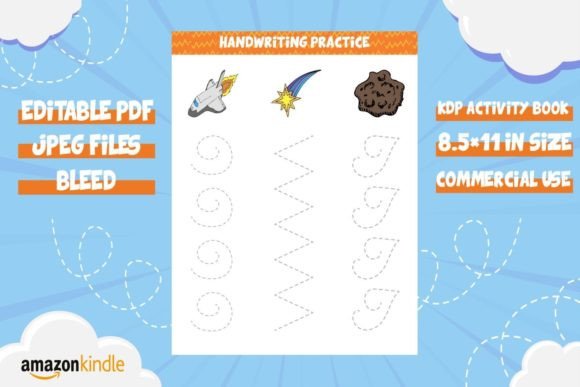
Handwriting Practice with Space: A Foundational Skill for Kindergarten Success
In the early stages of education, developing fine motor skills and letter formation is a critical milestone. Handwriting Practice with Space represents a targeted, thematic approach to this foundational learning, blending the excitement of outer space with the structured practice necessary for young children. This method goes beyond simple tracing; it uses engaging space-themed graphics—like planets, rockets, and stars—alongside classic preschool shapes to create a context that motivates kindergarten-aged kids. The goal is to transform repetitive practice into an imaginative activity, helping children build the muscle control and cognitive patterns needed for legible writing.
The Challenges of Early Handwriting Development
Parents and educators of kindergarten children often face a common set of challenges when introducing handwriting. Young learners may exhibit short attention spans, frustration with the physical difficulty of holding a pencil, or a simple lack of interest in repetitive line and shape exercises. The core need is to bridge the gap between a child’s natural curiosity and the disciplined practice required for academic growth. Without engagement, practice sessions can feel tedious and ineffective, potentially slowing progress in not only writing but also in tasks that require similar fine motor coordination, such as drawing, cutting, and self-care activities.
How Space-Themed Practice Addresses These Needs
Handwriting Practice with Space directly tackles the engagement challenge by anchoring the skill development in a universally captivating theme. When a child is tasked with tracing a line from a rocket to a moon, or practicing circular motions within the outline of a planet, the activity feels like a game or a story, not just an assignment. This thematic layer provides a motivational context that makes the repetition more palatable. The incorporation of preschool shapes—triangles, squares, circles—within the space scenes serves a dual purpose. It reinforces shape recognition, a key kindergarten math skill, while simultaneously practicing the very strokes that form the basis of letters: the straight lines of triangles for letters like ‘A’ and ‘T’, the curves of circles for ‘C’ and ‘O’. This integrated approach ensures practice is holistic and efficient.
Practical Applications and Outcomes
Implementing Handwriting Practice with Space is straightforward and yields tangible outcomes. Typically, these resources are provided as printable PDF worksheets, allowing for immediate use at home, in the classroom, or even on the go. A practical session might involve using the three PDF pages progressively: starting with simple shape tracing within space objects, moving to connecting space items with straight and curved lines, and finally practicing more complex paths that mimic letter patterns. The outcomes extend beyond a neat pencil line. Children develop improved pencil grip, better hand-eye coordination, and increased confidence in their ability to control a writing tool. This confidence often translates to a more positive attitude toward other learning activities, reducing anxiety around new tasks.
Tailoring the Approach for Different Users
The flexible nature of Handwriting Practice with Space allows different users to adapt it to their specific situation. For the busy parent, the printable high-quality PDF and JPG files offer a ready-to-go solution that requires no preparation; a few minutes of practice after school or during a quiet weekend morning can make a significant difference. Educators can integrate these sheets into larger unit themes about space or transportation, creating a cross-curricular link that deepens learning. For a child who is particularly resistant to practice, focusing on the fun JPG images—perhaps even coloring the space scenes after tracing—can be a first step toward building a positive association with writing tools. The key is to follow the child’s interest, using the space theme as a gateway to the essential practice underneath.
Recommendations and Useful Considerations
When using these practice pages, a few considerations will maximize their effectiveness. First, always emphasize process over perfection. Praise the child’s effort and focus, not just the accuracy of the line. Second, combine the practice with verbal interaction: ask what planet they are tracing or what sound the rocket makes as it zooms along the path. This engages their language skills simultaneously. Finally, ensure the tools are appropriate: a thick, easy-to-grip pencil or crayon for beginners and a comfortable, well-lit workspace. Remember, the provided high-quality print-ready PDF files are designed for clarity, so the lines and shapes are distinct and easy for young eyes to follow, preventing unnecessary frustration.
From Practice to Proficiency: Building a Strong Foundation
Ultimately, Handwriting Practice with Space is more than just a set of worksheets; it’s a strategy for building a critical educational foundation in an enjoyable way. By meeting the kindergarten child’s need for play and imagination, it unlocks their willingness to engage in the disciplined work of motor skill development. The consistent practice of these lines and shapes, framed within an exciting narrative, prepares them directly for the next step: forming letters and numbers with control and confidence. This early proficiency in handwriting opens doors to independent expression, note-taking, and a smoother transition into more advanced literacy skills, making the initial investment in fun, thematic practice a cornerstone of long-term academic success.