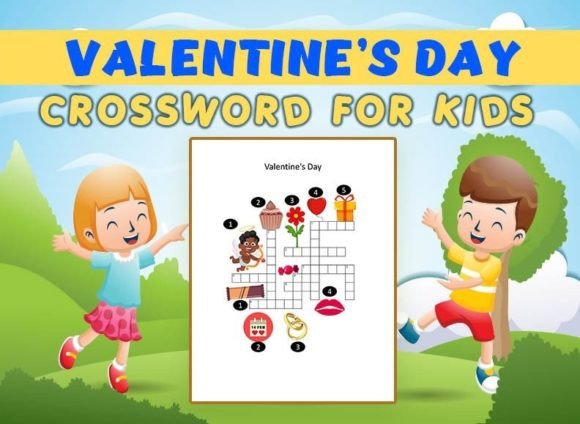
Valentine's Day Crossword Puzzles for Kids: A Strategic Opportunity for Publishers
For creators looking to build a profitable publishing business on platforms like Amazon KDP, identifying high-converting niches is the first critical step. Among the most reliable categories are children's activity books, where puzzles, coloring pages, and word games consistently attract eager buyers. A focused product like a Valentine's Day Crossword Puzzle for Kids represents more than just a seasonal item; it is a strategic asset that taps into predictable demand, supports educational values, and offers a manageable entry point into a lucrative market.
Understanding the Strategic Utility of Seasonal Activity Books
A Valentine's Day Crossword Puzzle for Kids is a themed activity book designed to engage children with vocabulary and problem-solving related to love, friendship, kindness, and holiday symbols. Its utility for publishers extends far beyond the simple puzzle. Seasonally-aligned content capitalizes on annual search trends and purchasing behavior, providing a clear marketing window. For parents, educators, and gift-givers, these books serve as a resource for constructive holiday fun, blending entertainment with subtle educational benefits like spelling practice and cognitive skill development.
From a business perspective, this product fits perfectly into the low-content publishing model, where well-designed interiors can be produced efficiently and bundled into various formats—single puzzle books, larger activity collections, or digital downloads. The strategic advantage lies in its specificity: it solves a distinct, seasonal need for a defined audience, making it easier to position, market, and sell compared to generic puzzle books.
Aligning Product Creation with Clear Business Goals
Before sourcing or creating a Valentine's Day Crossword Puzzle for Kids, it's essential to anchor the project to your broader goals. Are you aiming to establish a foothold in the children's niche, build a portfolio of seasonal products, or test a specific marketing channel? Your approach should differ accordingly.
- For Portfolio Building: Consider this puzzle book as one tile in a larger mosaic. Plan a series across holidays (Easter, Halloween, Christmas) to build recurring customer interest and year-round sales.
- For Market Testing: Use a single, well-executed Valentine's Day book to gauge audience response, refine your design choices, and understand keyword performance before scaling.
- For Brand Establishment: Integrate a consistent visual style and quality standard into your puzzle books to create a recognizable publisher identity that parents trust.
Without this goal-oriented foundation, you risk creating a one-off product that generates little long-term value or learning.
Practical Considerations in Content Development and Design
The process of creating a compelling Valentine's Day Crossword Puzzle for Kids involves several strategic decisions that impact the final product's appeal and commercial success.
Balancing Uniqueness with Usability
While the puzzle concept is simple, the content must feel fresh and appropriate for the age group. Clues should revolve around positive, child-friendly Valentine's themes—"heart," "cupid," "friend," "share"—avoiding overly complex or romantic terms. The grid size and difficulty must match the target age range, typically 6–10 years old. A unique, attracting interior doesn't merely refer to artistic fonts or clip art; it means thoughtful puzzle construction that feels rewarding to complete, encouraging repeat purchases or positive reviews.
This is where leveraging professional or pre-designed content can be a strategic move. As noted, the creation stages are long. Utilizing expertly crafted Valentine's Day Crossword Puzzle for Kids interiors allows you to bypass the most time-intensive phase—content generation and puzzle design—and focus your energy on packaging, marketing, and distribution. You download the content, integrate it into your book layout, and add your cover and branding. This approach dramatically lowers the barrier to entry and accelerates time-to-market, which is crucial for capturing seasonal demand.
Positioning and Customer Experience Strategy
How you present the product influences its perceived value. A Valentine's Day Crossword Puzzle for Kids can be positioned as a quiet-time activity, a classroom supplement, or a holiday party favor. Your book's description, cover imagery, and sample interior pages should reflect this positioning. Consider the end-user experience: is the book physically durable for young hands? Are the pages clearly printed with ample space for writing? These operational details, often overlooked, directly affect customer satisfaction and reviews, which are vital for long-term ranking and sales on platforms like KDP.
Integrating Activity Books into a Sustainable Publishing Operation
Viewing this single product as part of a systematic operation transforms it from a speculative project into a strategic component. Sustainable publishing relies on processes, consistency, and audience understanding.
- Workflow Efficiency: Establish a repeatable process for incorporating downloaded puzzle interiors. This includes a standard template for formatting, a checklist for quality assurance (checking clue accuracy, solution pages), and a consistent method for cover design.
- Audience Feedback Loop: Use sales data and customer reviews from your initial Valentine's Day Crossword Puzzle for Kids launch to inform future creations. Are requests for more puzzles per book? Do customers mention a preference for larger fonts? This data is gold for iterative improvement.
- Cross-Promotion Planning: Once you have a Valentine's Day book, you can use it to promote other non-seasonal activity books in your catalog, using "Also by This Publisher" features or bundled offers.
Potential Risks of a Tactical, Non-Strategic Approach
The allure of low-content books is their apparent simplicity, which can lead to a tactical, rushed approach. Simply uploading a generic Valentine's Day Crossword Puzzle for Kids without clear goals or context carries several risks.
First, market saturation. The seasonal niche attracts many publishers; without a unique angle or superior quality, your product may drown in the competition. Second, misaligned difficulty can lead to poor reviews, damaging your publisher reputation. Third, a lack of strategic planning around the product launch—such as ignoring keyword research or missing the optimal pre-Valentine's Day launch window—can result in minimal visibility and sales. The product must be used intentionally, as a calculated step in a larger plan, not as a random publishing experiment.
Long-Term Value and Strategic Evolution
A successful initial venture with a Valentine's Day Crossword Puzzle for Kids opens avenues for strategic evolution. You might expand into complementary formats: word searches, coloring pages, or Sudoku with Valentine's themes, creating larger compilation books. You could branch into bilingual puzzle books to serve a wider audience, or develop digital interactive versions. The key is to use the initial product as a learning platform and credibility builder.
Ultimately, the thoughtful creation and marketing of a themed puzzle book for children is a exercise in targeted problem-solving. You are solving a parent's need for wholesome holiday activities, a teacher's need for classroom resources, and your own business need for a viable, converting product. By approaching the Valentine's Day Crossword Puzzle for Kids with the mindset of an experienced practitioner—focusing on goals, process, quality, and long-term audience relationships—you transform a simple activity sheet into a strategic tool for building a resilient and profitable publishing enterprise.