The Anatomy of a Profitable KDP Puzzle Book: Analyzing the Word Search Puzzles PAPER KDP Interior
For many entrepreneurs and creators exploring the Amazon KDP landscape, the puzzle book niche represents a compelling opportunity. The market is vast, but success hinges on the quality and design of the interior content itself. A product like the Word Search Puzzles PAPER KDP interior—a package offering 190 assorted puzzles with solutions—serves as a tangible case study for understanding what separates a generic offering from a potentially competitive one. Evaluating such a resource requires a practical look at its composition, its strategic fit within the KDP ecosystem, and the inherent tradeoffs between using pre-made interiors versus crafting one from scratch.
What Defines the Word Search Puzzles PAPER KDP Product
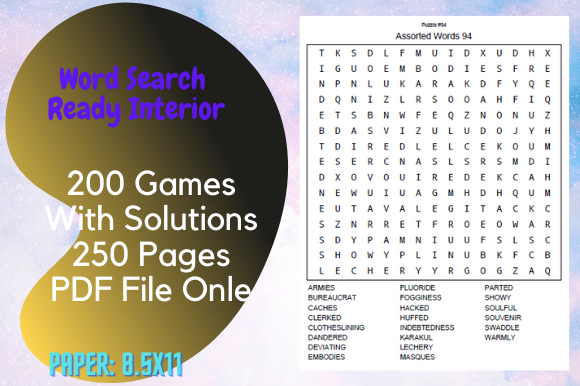
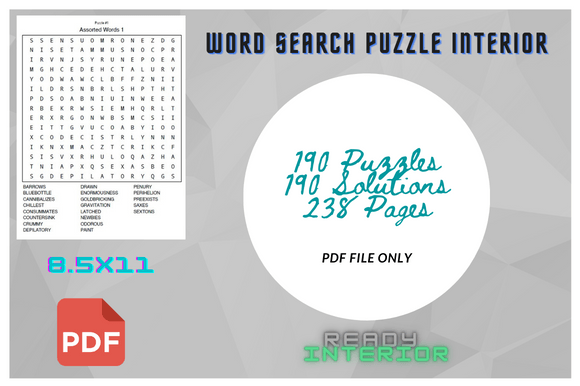
Specifically, the Word Search Puzzles PAPER KDP interior is described as a ready-to-upload PDF file containing 190 newly generated word search puzzles. Its specifications are typical for the activity book genre: 238 pages in an 8.5″x11″ format, featuring one puzzle per page with included solutions. This structure is a direct response to known KDP customer preferences—solvers often dislike cramped layouts and appreciate having answers readily available, usually at the end of the book or on alternating pages. The "assorted" nature of the puzzles implies a variety of themes and word lists, which is a critical factor for maintaining reader engagement throughout the book. This isn't a specialized thematic volume but rather a general-purpose collection aimed at a broad audience.
Key Considerations in KDP Puzzle Book Interiors
When assessing any pre-designed interior, several core dimensions come into play. These are the same factors one would weigh when comparing the Word Search Puzzles PAPER KDP approach to other methods of content creation.
Volume and Perceived Value
The number of puzzles is a primary marketing point. 190 puzzles signal substantial content, which can justify a higher price point and improve perceived value for the buyer. However, pure volume alone is not a guarantee of quality. The assortment must be genuinely diverse and the puzzles appropriately challenging. A buyer comparing two books might favor one with fewer, more meticulously crafted puzzles over another with a higher count but repetitive or simplistic themes. The tradeoff here is between production efficiency and unique creative input.
Formatting and Usability
The technical specifications—8.5″x11″, one puzzle per page—are industry standard. This format ensures clarity and avoids printer compatibility issues for customers who wish to print pages. It also creates a predictable page count (238 pages), which influences printing costs and the final book's thickness. An alternative approach might be to fit two puzzles on a page to create a shorter, more compact book, but this can compromise the user experience, especially for older adults or those preferring larger print. The Word Search Puzzles PAPER KDP format leans decisively towards user-friendliness over minimizing production costs.
Solution Presentation
Including solutions is non-optional for most commercial puzzle books. The method of inclusion, however, varies. Solutions interspersed after each puzzle can break flow, while a dedicated section at the end keeps the main content clean. The chosen method impacts the reader's navigation and the interior's page layout. A product with solutions seamlessly integrated demonstrates more thoughtful design than one where they are awkwardly appended.
Comparing Development Pathways: Pre-made vs. Custom Interiors
The decision to utilize a ready-made interior like Word Search Puzzles PAPER KDP is fundamentally a choice between time, cost, and control. Let's explore the realistic comparisons.
For a creator with limited graphic design skills or time, a pre-designed, ready-to-upload PDF is a pragmatic shortcut. It eliminates hundreds of hours of puzzle generation, formatting, and proofreading. The immediate benefit is speed to market; one can focus efforts on cover design, marketing, and pricing strategy. The limitation, however, is a lack of customization. The puzzles are "assorted," but the specific themes—whether they focus on travel, science, pop culture, or history—are predetermined. This might limit a creator's ability to target a very specific niche audience.
The alternative pathway involves crafting a custom interior. This grants full control over theme difficulty, word selection, and overall branding. It allows for the creation of a truly unique product that could stand out in a crowded marketplace. The tradeoffs are significant: it requires investment in software (or manual creation skills), a considerable time commitment for creation and quality assurance, and a higher risk of formatting errors. For someone with a clear vision for a specialized puzzle book—say, "Word Searches for Gardeners"—a custom interior is likely the better fit. For an entrepreneur seeking to establish a broad-based activity book portfolio quickly, a well-made pre-designed interior serves as an efficient foundation.
Evaluating Quality and Market Fit
Not all pre-made interiors are created equal. The strengths of a product like Word Search Puzzles PAPER KDP hinge on the unseen details. The phrase "newly generated" suggests fresh puzzles, avoiding the issue of recycled content that appears across multiple KDP books, which can harm credibility. The professional layout—clean grids, legible fonts, consistent spacing—is essential. A poorly formatted interior, even with 190 puzzles, will lead to negative reviews that focus on usability rather than enjoyment.
The "best-fit" situation for this type of resource is a creator who values efficiency and is entering the general adult puzzle book market. It serves as a complete content engine, allowing the creator to act as a publisher and marketer. Its limitations become apparent when the goal is deep niche penetration or establishing a brand with a highly distinctive voice. In those cases, the interior is a starting point that may require additional customization or simply be an unsuitable choice.
Decision Factors for the KDP Creator
- Time Investment: How quickly do you need a product live? Pre-made interiors dramatically accelerate the process.
- Specialization: Is your target audience broad (general adults) or narrow (enthusiasts of a specific hobby)?
- Skill Set: Do you possess the skills and patience to generate, format, and proofread 190 unique puzzles?
- Brand Vision: Is your goal to build a recognizable brand with a consistent puzzle style, or to test the market with a professionally assembled product?
- Economic Model: Are you aiming for volume across multiple titles, or deep success with a few highly tailored books?
When is Word Search Puzzles PAPER KDP the Right Choice?
This interior resource aligns well with specific creator profiles. It is advantageous for the newcomer to KDP who wants to validate the puzzle book market without upfront content creation overhead. It is also suitable for the established publisher looking to expand their catalog efficiently with a reliable, standard-quality product. Furthermore, it serves those who understand that marketing and cover design are their primary competitive tools and are content to use a solid, if generic, interior as their foundation.
Conversely, an alternative option is necessary when a creator's entire strategy is based on uniqueness. If you plan to build a series around vintage movies, complex scientific terminology, or regional dialects, the assorted nature of this interior won't provide the cohesive depth required. Similarly, if your comparative analysis shows that the top-performing books in your target sub-niche all feature custom illustrations, intricate thematic layouts, or progressive difficulty curves, then a basic pre-made template may not provide the competitive edge needed.
Ultimately, products like the Word Search Puzzles PAPER KDP interior represent a specific point on the spectrum of KDP publishing tools. They offer a balanced compromise between quality and convenience. A thorough evaluation involves matching their inherent properties—the volume, format, and ready-made nature—against your personal resources, goals, and the specific competitive gaps you aim to fill in the marketplace. By understanding both the utility and the constraints of such a resource, you can make a more informed decision about whether it is the engine for your next project or merely a reference point in your search for a better-fitting solution.