A Practical Evaluation of the Sudoku Puzzle Puzzle Book for Kids KDP Interior
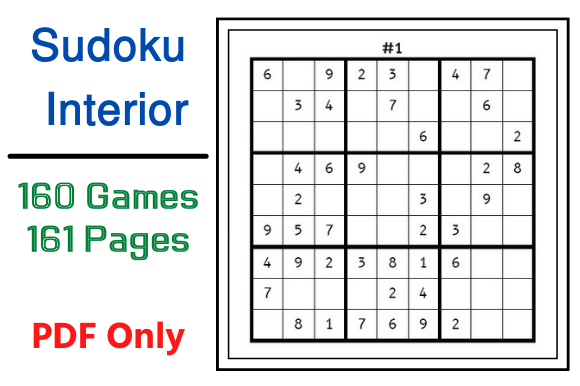
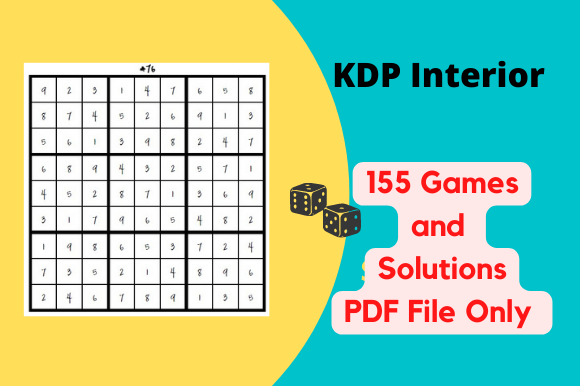
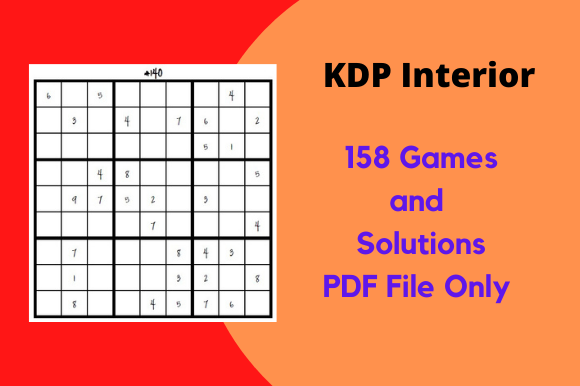
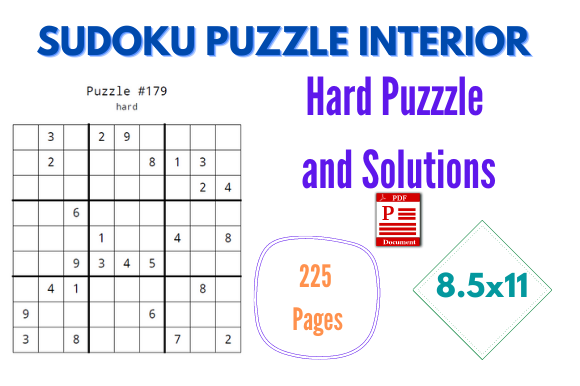
For creators in the digital publishing space, especially those focusing on low-content or no-content books for print-on-demand platforms, the quality of the interior template is a critical success factor. The Sudoku Puzzle Puzzle Book for Kids represents a specific digital product designed for this market: a ready-to-use 225-page PDF containing 180 puzzles and solutions, formatted for standard 8.5 x 11 inch printing. Its value lies not as a consumer puzzle book, but as a professional resource for entrepreneurs seeking to quickly and reliably publish a niche product.
Core Characteristics and Immediate Utility
The product is explicitly a digital interior file. It arrives as a completed PDF, meaning it requires no assembly, design work, or puzzle generation from the buyer. The stated specifications are clear: 180 distinct Sudoku games spread across 225 total pages, including solutions, in a black-and-white format. This straightforward description eliminates ambiguity, which is essential for business use. The inclusion of a PowerPoint (.pptx) source file for customization is a significant strength. It provides flexibility, allowing for the addition of an author name, page removal, or minor layout adjustments without requiring advanced graphic design software or skills.
The practical value here is efficiency. For a creator aiming to list a Sudoku book for kids on Amazon KDP or a similar platform, this interior removes the most time-consuming phase: content creation and page formatting. The 180 puzzles offer substantial volume, making the final product appear robust and worthwhile to potential buyers. The clean, black-and-white presentation is cost-effective for printing and meets the expectations for this genre.
Performance in Real-World Publishing Scenarios
In a operational context, this interior template performs a specific role. It serves as a plug-and-play component. The publisher downloads the PDF, uploads it directly to KDP as the manuscript file, and pairs it with a separately designed cover. This process can reduce the project timeline from days to hours. The reliability hinges on the template's adherence to platform guidelines. The 8.5 x 11 inch size is a standard, accepted dimension, minimizing technical rejection risks.
However, real-world performance also depends on the unseen qualities of the puzzles themselves. The evaluation here must consider the assumed but unverified aspects: the grading of difficulty appropriate for children, the logical uniqueness of each puzzle solution, and the visual clarity of the grids. A template's long-term value is tied to the end-customer's satisfaction. If the puzzles are poorly constructed or inconsistently difficult, the published book could receive negative reviews, affecting the publisher's brand. Therefore, while the template offers immediate usability, its effectiveness is partially dependent on the original creator's diligence in puzzle design.
Analysis of Flexibility and Professional Considerations
The provision of the editable PPTX file notably enhances the product's flexibility. It allows professionals to tailor the book to a specific sub-niche. For example, an educator might add a brief "How to Solve" guide page; a marketer might insert a series title or brand logo. This capability transforms the product from a static template into a adaptable foundation. It supports a degree of branding and differentiation in a market often crowded with very similar offerings.
From a quality perspective, the presentation is likely functional. Black-and-white Sudoku grids are inherently simple; the primary concerns would be consistent font sizing for numbers, adequate spacing, and clear page numbering. The 225-page count suggests solutions are provided in a separate section, which is a standard and user-friendly approach. The consistency across 180 games is a key metric—if every puzzle maintains the same layout and print quality, the final product achieves a professional uniformity.
Identifying the Ideal User and Project Fit
This Sudoku Puzzle Puzzle Book for Kids interior is not for hobbyists looking for puzzles to solve. Its audience is the community of online entrepreneurs, freelancers, and small business owners operating in the KDP and low-content book space. It fits perfectly for someone who understands the market dynamics and sees an opportunity in the "activity books for kids" category but lacks the time or specific skill set to create hundreds of valid Sudoku puzzles.
It is particularly suited for:
- KDP newcomers seeking a straightforward first project to learn the publishing process.
- Established publishers wishing to expand their catalog into the children's activity segment without diverting core resources.
- Educators or child-care professionals who want to create a custom workbook for their students or clients by adding their own instructional material to the template.
- Bloggers or content creators in the parenting or educational niches looking to create a physical product as a brand extension or revenue supplement.
The situations where it may not be the best fit include projects requiring highly customized puzzle types (like shapes or colors), books targeting a very specific age group that needs meticulously difficulty-sorted puzzles, or creators who possess the skills and desire to build a completely unique product from scratch for maximum differentiation.
Practical Recommendations and Observations
For a professional considering this product, the due diligence step involves verifying the puzzle quality. Since it is a digital product, this might mean purchasing the template and spot-checking several puzzles for logical coherence and appropriate challenge level for children. Another practical step is to test the PDF upload in a KDP draft project to ensure no formatting errors appear in the online previewer.
The recommendation to "visit our store for more wonderful products" suggests the seller offers a range of similar interiors. For a publisher, this can be advantageous. Establishing a relationship with a supplier of reliable templates can streamline the production of a series of books, ensuring consistent interior styling across multiple titles, which can be beneficial for brand recognition.
A potential limitation is the very nature of a widespread template. Many sellers might offer similar Sudoku interiors, leading to market saturation. The publisher using this template must therefore invest effort in a distinctive cover design, targeted marketing, and perhaps leveraging the editable file to add unique front or back matter. The interior is a tool; the book's success depends on how effectively that tool is integrated into a broader publishing strategy.
In summary, the Sudoku Puzzle Puzzle Book for Kids KDP interior provides a concrete, practical solution for a specific business need. Its strengths are its readiness, volume, standard formatting, and customization potential. Its value is measured in time saved and risk reduced. For the right user—a pragmatic creator focused on the publishing process rather than the puzzle-design process—it represents a capable and efficient asset that can directly contribute to product launch and catalog growth.